
Best of Spotlights · 7 min read
Every solidarity economy initiative faces the same invisible wall. You have the people, the mission, the community support. But to handle money legally you need a bank account, a legal entity, and an accountant. For grassroots groups without those resources, this bureaucratic wall stops movements before they start. Open Collective exists to tear that wall down.
Thousands of collectives hosted globally · $100M+ raised and spent transparently · 2024 — platform transitions to community-governed nonprofit · 100+ mutual aid groups supported
The Problem: Financial Infrastructure as a Barrier
Most tools for handling money were built for corporations, not communities. To legally receive and spend funds as a group, you typically need to incorporate, open a business bank account, hire an accountant, file annual reports, and navigate tax compliance.
For a neighborhood mutual aid network, a climate justice collective, or an open source project run by volunteers — this is an enormous barrier that consumes resources, time, and energy that should go toward the actual mission.
Open Collective was built to solve this problem — to give groups access to financial infrastructure that matches their values without requiring them to become conventional corporations.
What Open Collective Does
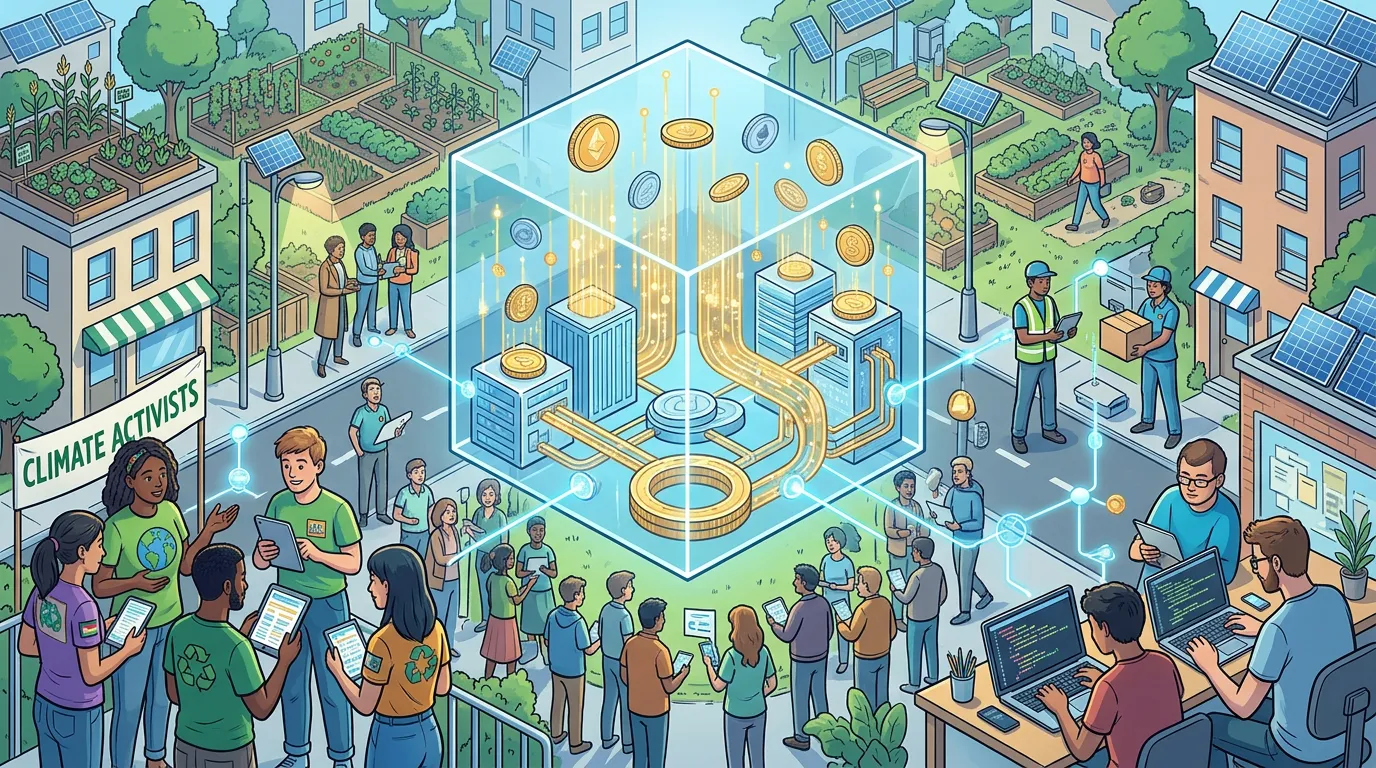
Open Collective’s solution was a new kind of financial infrastructure: one that gives groups access to fiscal sponsorship, enabling them to raise and spend funds under the umbrella of a trusted legal entity while staying focused on their mission. Collectives can finally operate openly, with transparent budgets and clear public ledgers. From the start, transparency was at the heart of the model — not just in how money moves but in how decisions are made.
The platform works through fiscal hosts — legal entities that hold funds on behalf of collectives and handle the legal and accounting infrastructure. Every transaction is publicly visible in real time. Making money flows transparent is itself a form of democratic governance.
The Ecosystem: Who Uses Open Collective
Mutual Aid Networks. Open Collective has been able to support over 150 mutual aid groups to get going quickly by providing fiscal hosting back office support.
During the COVID-19 pandemic, mutual aid networks exploded across the United States and globally. Open Collective became the financial backbone of that movement — giving hundreds of grassroots networks the ability to receive donations and pay for supplies without incorporating as nonprofits.
Climate Action Collectives. Climate justice groups use Open Collective to raise funds, coordinate spending, and demonstrate financial transparency to donors and partners. Grassroots environmental organizing powered by democratic financial infrastructure.
Open Source Projects. Open Source Collective is a nonprofit fiscal host that has been providing financial and legal infrastructure to open source projects since 2017, supporting over 2,500 open-source projects worldwide. Open source contributors who previously had no way to receive financial support for their work now can — through a transparent, democratic financial platform.
Want more stories like this in your inbox?
New posts every week on cooperative economics, solidarity economy tools, and the infrastructure being built for the new economy. No spam — ever.
Subscribe at solidarityecono.my →
The 2024 Transition: From Startup to Community Governance
Open Collective was originally founded as a venture-backed startup. In October 2024, the platform moved from Open Collective Inc. to the Open Finance Consortium (OFiCo) — a newly formed, community-governed nonprofit.
This is the cooperative transition in action. A platform built by a startup, used by thousands of solidarity economy initiatives, was transferred to community governance — stewarded by the organizations that use it rather than by venture capital investors seeking returns.
OFiCo is a nonprofit coordinating the governance and evolution of open financial tools, maintaining and governing the platform to ensure it stays community-owned and designed for the long-term resilience of the commons.
How Fiscal Hosting Works: The Cooperative Model in Practice
- A collective forms — a mutual aid group, a climate action network, an open source project team
- They find a fiscal host that aligns with their mission
- The collective raises money through the platform — all publicly visible
- When they need to spend money, a member submits an expense request with documentation
- Other collective members approve the expense democratically
- The fiscal host pays from the funds held on behalf of the collective
- Every transaction appears in the public ledger — permanently, transparently, accountably
This is democratic financial governance built into the infrastructure itself. Not as a policy but as a technical reality — you cannot hide money flows on Open Collective.
The Solidarity Economy Connection
Open Collective sits at the intersection of several streams of the solidarity economy — directly serving cooperative enterprises, enabling the mutual aid explosion of 2020, providing financial infrastructure for climate justice groups, embodying the transparency principle, and itself becoming community-governed in 2024.
“Financial power and community power go hand in hand. Open Collective exists to spread wealth and power and root it in community — to unlock access to funding for the solidarity economy. We are radical administrators for a decentralized future.” — Open Collective Foundation
Why This Matters for the Solidarity Economy
The solidarity economy needs more than good values and hard-working people. It needs infrastructure. Legal infrastructure. Financial infrastructure. Technical infrastructure. The same boring back-office systems that corporations take for granted but that grassroots groups have historically had to build from scratch or go without.
Open Collective is that infrastructure — built specifically for the solidarity economy, governed by the communities that use it, and transparent by design.
Every mutual aid network that used Open Collective to feed their neighborhood during COVID. Every climate collective that raised funds to plant trees and install solar. Every open source developer who got paid for their first contribution. Every cooperative that received its first donation through a public ledger. These are not small things. They are the unglamorous, essential work of building a new economy.
Keep Going
- 🌐 Be part of it — solidarityecono.my
- 📋 Get involved — fill out our intake form
- 🛒 Shop at our Marketplace — solidarityecono.my
This is part of our Best of Spotlights series — shining a light on the cooperative businesses and projects building the new economy. Know a collective we should feature? Reach out through solidarityecono.my.
Written by the Cooperative Codebase team — Aaron, Israel, and Jamie. Part of the Solidarity Economy Marketplace. Last updated: July 2026.
Comments