Voices · 8 min read
Three builders, three dreamers, one mission. Meet Aaron, Israel, and Jamie — the people behind Cooperative Codebase and why we believe ordinary people can build an extraordinary economy.
Before we talk about cooperative economics, solidarity economies, or the theory of a better world — we want to talk about us. Because everything we write here comes from somewhere real. From lived experience. From watching systems fail the people we love. From a stubborn, unshakeable belief that it doesn’t have to be this way.
We are three friends. Three builders. Three people who looked at the world and decided that complaining wasn’t enough.
This is who we are.
Aaron — The Architect
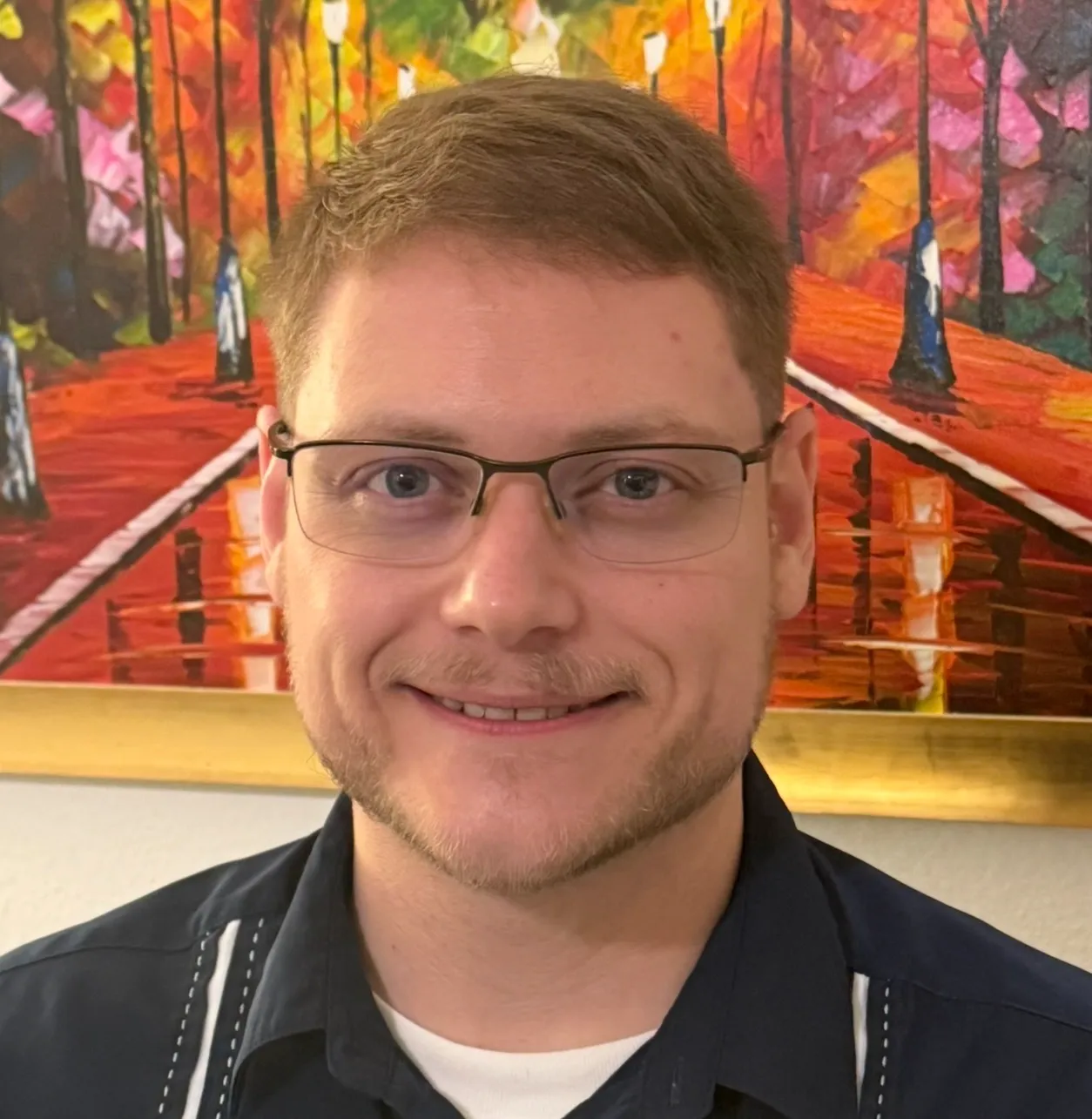
There’s something quietly powerful about a person who teaches themselves to code on the side while serving their country.
A Navy veteran, a developer, and a father, Aaron has spent his life building things that matter. His journey into programming didn’t start in a Silicon Valley bootcamp or a university computer science program. It started on his own time, in the margins of his military service — driven by curiosity, discipline, and the quiet conviction that technology was a tool worth mastering. Not for wealth. Not for status. But because he could see what it was capable of, and he wanted to be the one pointing it in the right direction.
That self-taught foundation built something that formal education rarely does: genuine problem-solving instincts. Aaron didn’t learn to code by following a curriculum. He learned by building, breaking, researching, and building again. That process forged a developer who is not intimidated by hard problems — because hard problems are where he started.
But what sets Aaron apart isn’t just what he can build. It’s why he builds. As a father, Aaron thinks in generations. Not just about what the world looks like today, but about what kind of world his children will inherit. That long view shapes everything he does here — because cooperative economics isn’t just about making things better right now. It’s about building structures that last, that distribute power rather than concentrate it, that give the next generation a foundation instead of a hole to climb out of.
Aaron brings to this project what the cooperative movement has always needed most: someone who understands how systems are architected, who can look at the infrastructure of an economy and say — this was designed by people, which means it can be redesigned by people. And then roll up his sleeves and actually do it.
Israel — The Historian
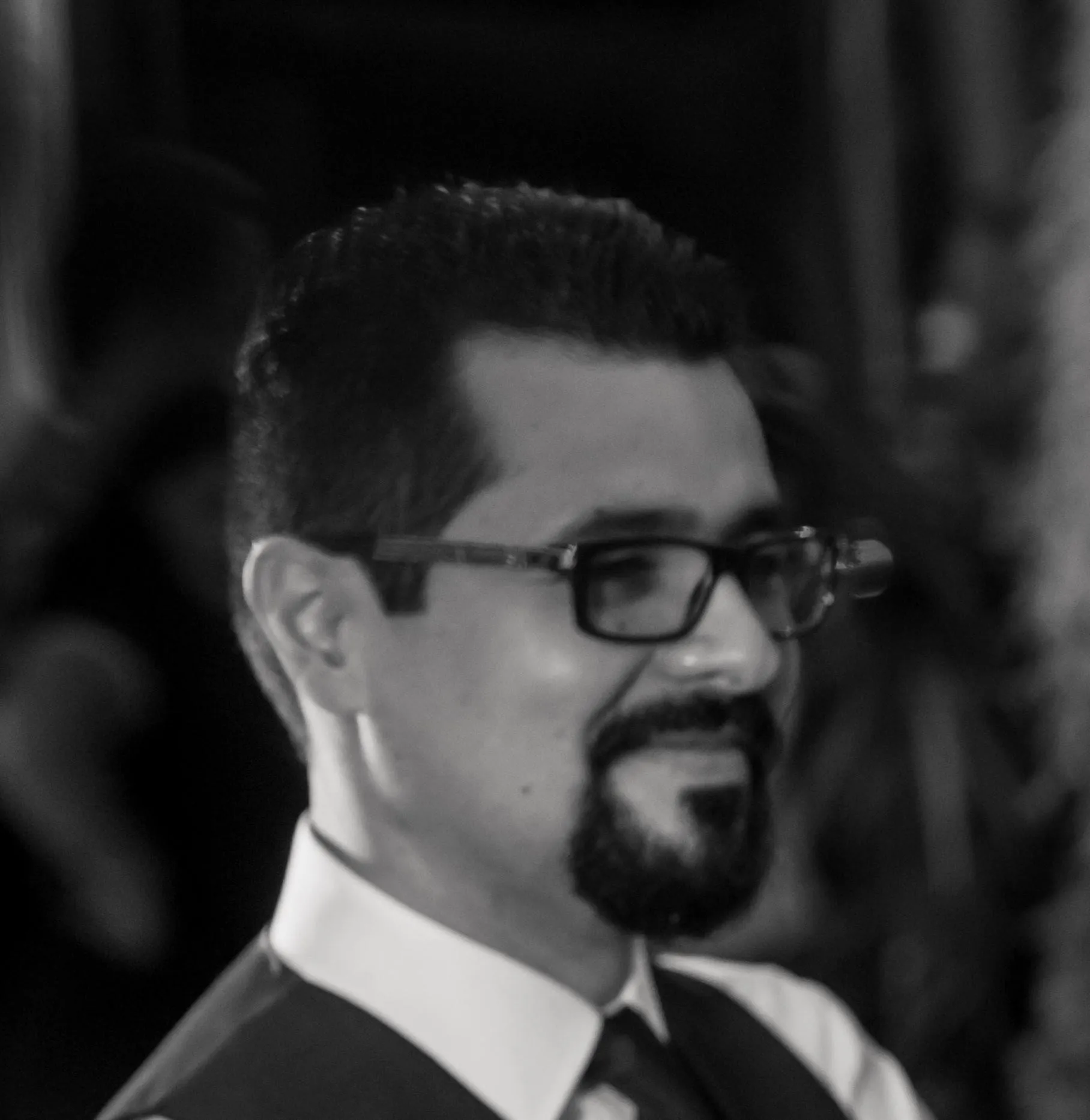
To understand where we’re going, you have to understand where we’ve been. Israel gets that better than almost anyone.
A cloud-focused full stack developer by trade, Israel moves through the world with the rare combination of technical precision and historical consciousness. He knows how to build infrastructure that scales — and he knows why it matters that the people who use that infrastructure have a say in how it’s governed.
His passion for history isn’t academic. It’s urgent. Because the struggles we face today — the concentration of wealth, the exploitation of workers, the erasure of community — aren’t new. They’ve been fought before. And the people who fought them left behind tools, strategies, and hard-won wisdom that we’d be fools to ignore.
That history is alive in our blog. When we write about Venezuela’s 90,000 cooperative experiment or dig into what made Mondragon the world’s most powerful worker-owned corporation, that’s Israel’s fingerprints — the insistence that we learn from the people who tried this before us.
Israel is the kind of person who walks into a room and genuinely wants to know everyone’s story. Community isn’t a buzzword to him — it’s the whole point. He believes, as we all do, that the solutions to our biggest problems already exist inside the people most affected by them. The work is creating the conditions for those solutions to emerge.
He brings to the Cooperative Codebase something we desperately need: memory. The knowledge that this has been done before, that we stand on the shoulders of people who dared to try, and that their legacy is both a gift and a responsibility.
Jamie — The Connector
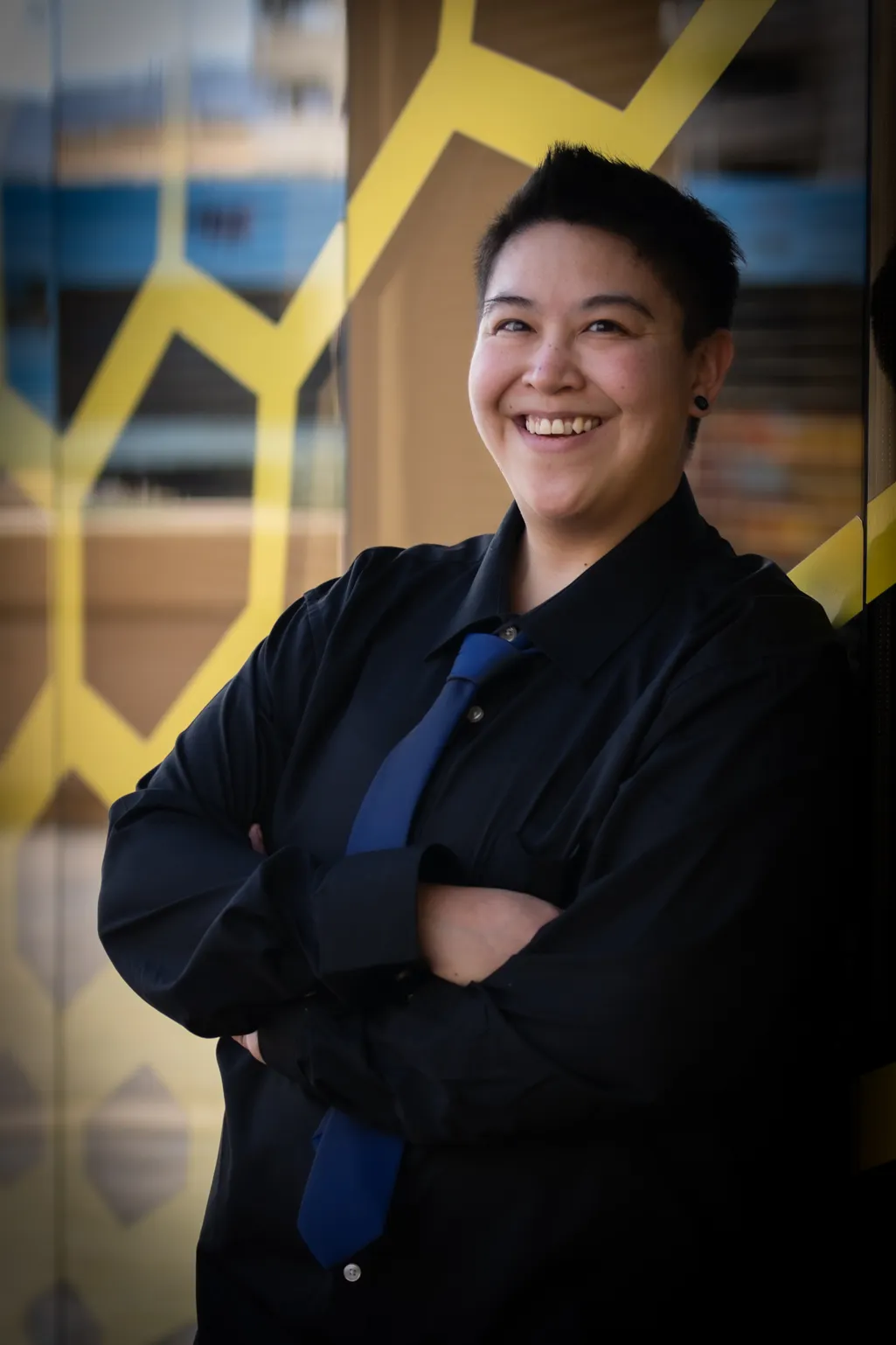
Jamie builds things. Physical things — wood, metal, 3D printed parts fresh off the bed. Digital things — code, prototypes, systems. And then she turns around and teaches everyone in the room how to do the same.
A Navy veteran, a mother, a teacher, and a programmer, Jamie has spent her life at the intersection of technology and humanity. She currently teaches rapid prototyping with C++, which means she lives and breathes the art of taking an idea from nothing to something — fast, intentionally, and with purpose. In a world that often treats technical knowledge as a gate kept privilege, Jamie treats it as a birthright. Everyone deserves to know how to build. Everyone deserves the tools to make their ideas real.
Her time in the Navy shaped her in ways that go deeper than discipline or resilience, though she has plenty of both. The military teaches you that the mission matters more than the individual, that the people beside you are the whole point, and that when things get hard, you don’t abandon ship — you fix it, together. Jamie carried that lesson out of uniform and into every classroom, every project, and every conversation since.
As a teacher of rapid prototyping, she understands that the new economy isn’t going to be built by people who theorize endlessly — it’s going to be built by people who throw something together, test it against reality, learn from what breaks, and build it better. That is literally what she teaches for a living. And as a mother, she carries an urgency about the future that is impossible to manufacture or ignore — she is not willing to hand her children a broken system and call it inevitable.
Jamie brings to this project an unshakeable belief that every person who walks through the door has something irreplaceable to contribute. Her passion for togetherness is the heartbeat of the Cooperative Codebase — and the reason this space feels less like a blog and more like a home.
What We Share
We are three very different people with three very different journeys. But we share something that, once you have it, you can’t unfeel:
The conviction that the world as it is, is not the world as it has to be.
We are not interested in disruption for its own sake. We are not building the next startup, chasing the next funding round, or trying to get rich off the dream of a better world. We are workers. We are parents. We are veterans. We are teachers. We are community members who have felt the weight of an economy that was not designed with us in mind.
And we are done waiting for someone else to fix it.
We believe in the cooperative model — not as a niche economic experiment, but as a genuine alternative to the extractive capitalism that has left so many of us behind. If you want to understand the full values driving this project, read our values statement at solidarityecono.my.
We believe that comfort is not too much to ask for. That stability is not a luxury. That nobody should have to live in fear of losing everything just because they got sick, or because the economy had a bad quarter, or because some investor decided their neighborhood was undervalued.
Now We Want to Hear From You
This project is called the Cooperative Codebase — and that word, “cooperative”, means something. It means this isn’t ours alone. It’s yours too.
We want to know your story. We want to know what brought you here, what you’re building, what you’re dreaming about, what you’re angry about, what gives you hope.
So here’s our call to you:
- If you’re a worker who has ever felt like the system wasn’t built for you — tell us your story in the comments below
- If you’re building something cooperative, community-owned, something that puts people over profit — we want to spotlight you in our Best of Spotlights series
- If you’re an organizer, an educator, a dreamer, a builder — pull up a chair. This table is big enough.
- If you just found this blog and something in it made you feel a little less alone — welcome home.
The new economy isn’t going to be built by one person or one organization or one blog. It’s going to be built by all of us, together, one cooperative at a time.
Ready to be part of it? Fill out our intake form and tell us who you are and what you’re building. Or explore the full Solidarity Economy platform.
We’re glad you’re here.
Have a story to share? A cooperative to spotlight? Leave a comment below — the section is open and we read every single one. This space belongs to all of us.
— Aaron, Israel & Jamie
Cooperative Codebase, Est. 2026 | Solidarity Economy Marketplace
Comments