
Theory and Vision · 7 min read
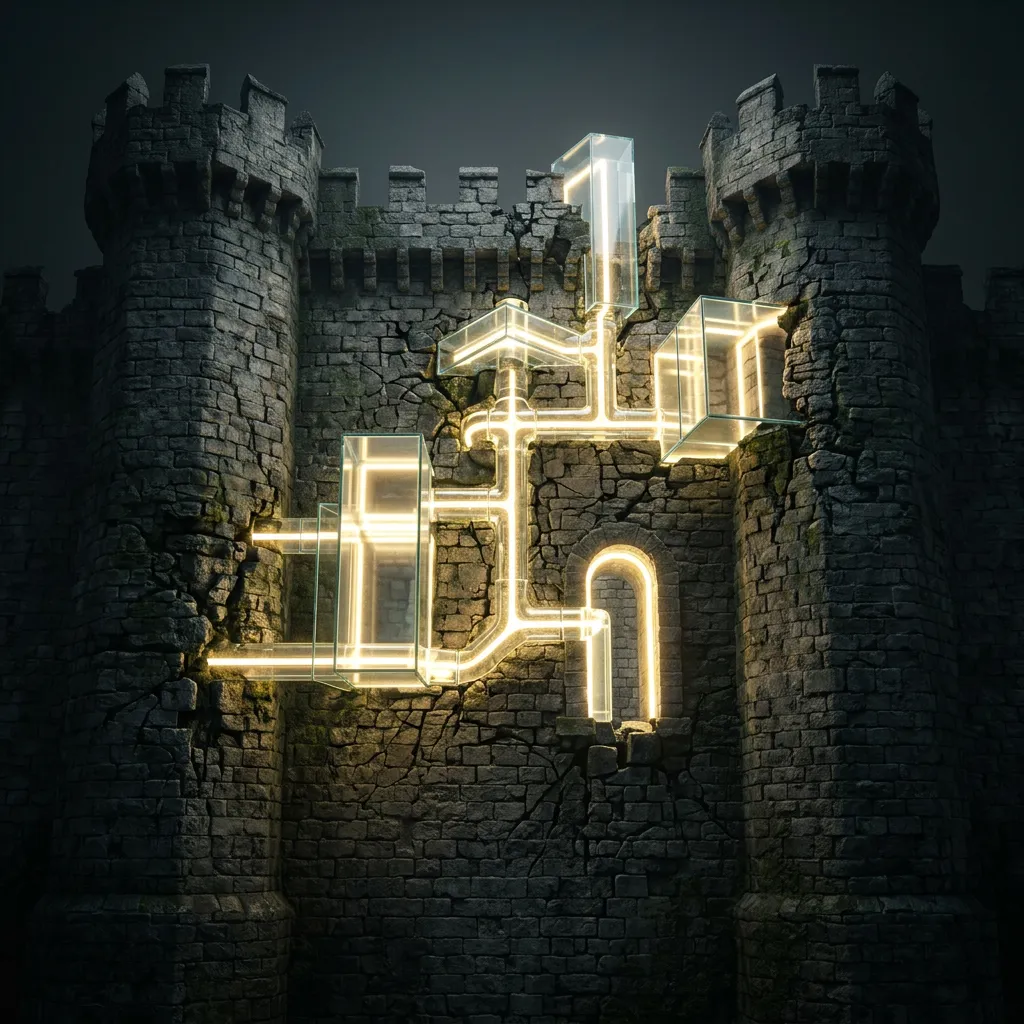
Capitalists did not begin by taking the state. They did not march on the feudal castle and declare the old order over. They built something — quietly, persistently, inside the existing system — networks of trade, instruments of credit, relationships of production that operated on different logic than the world around them. By the time capitalism became the dominant system, it had already built the world. The political victory was the last step, not the first.
The Historical Lesson
This is not a post that claims cooperativism is the same as capitalism. It is not. The core relationships are fundamentally different. Where capitalism replaces lord and serf with owner and employee, cooperativism proposes member and member.
But the strategy by which a new economic system grows to replace an old one — that lesson transfers.
How Capitalism Actually Rose
The standard story of capitalism’s rise focuses on revolutions. But those political ruptures came after the economic transformation was largely complete. By the time the French Revolution declared the rights of man, merchant capital had been accumulating for 300 years.
The Merchants Built First. Medieval merchants operated inside the feudal order — paying taxes to lords, receiving charters from kings. They were not revolutionaries. But they were building something different — a different logic of accumulation. Not land rents extracted from bound serfs, but profit generated by buying, transforming, and selling. Money invested in commodities to generate more money.
The Italian banking families of the 13th and 14th centuries. The merchant republics of Venice and Genoa. The trading companies of Amsterdam and London. None of these asked the feudal order for permission. They built their institutions inside it, alongside it, and eventually beyond it.
They Cooperated With Kings and Nobles — When Useful. Early capitalists were not uniformly anti-feudal. They worked with whoever served their interests. They financed feudal wars. They supplied feudal armies. They received monopoly charters from feudal monarchs. The point was never ideological purity. The point was accumulation.
Until Their World Was More Real Than the Old One. By the 17th and 18th centuries, the capitalist economy was not a supplement to the feudal order. It was the real economy. The political revolutions that followed were not creating a new order. They were ratifying one that already existed.
The Analogy for Cooperativism — and Its Limits
The cooperative movement is not capitalism. This analogy has real limits.
Early capitalism’s strategy of accumulation is precisely what cooperativism proposes to replace. The cooperative movement is not trying to build a new form of extraction. It is trying to build a new form of relationship: member and member, equal and equal.
But the strategic lesson transfers: build economic power inside the current system, without waiting for political permission, until your institutions are more real and more useful than the ones you are replacing.
Do not wait for a socialist government to create cooperative enterprises by decree. Build them now. Construct the alternative inside capitalism, as capitalism constructed itself inside feudalism — patiently, persistently, with clear strategic intent.
What “Building Inside the System” Actually Looks Like
Emilia-Romagna: 140 Years of Patient Building. The cooperative economy of Emilia-Romagna was not built by a revolutionary government. It was built inside the Italian capitalist economy — by workers and farmers who organized cooperatives, built federations, created their own financial institutions, and accumulated economic power generation by generation. By the time anyone noticed, cooperatives produced 40% of the region’s GDP.
Mondragon: One School, Then One Cooperative, Then a Federation. José María Arizmendiarrieta started a polytechnic school in 1943. Then one cooperative in 1956. Then a bank. Then a federation. Five workers became 70,000 worker-owners — not through political revolution but through patient, strategic institution-building inside the existing system. Mondragon remains the world’s largest worker cooperative federation.
The OCFCU: Building a Bank Before Building Power. The Oromia Coffee Farmers Cooperative Union built its own cooperative infrastructure — washing stations, export facilities, and eventually its own bank — until it controlled enough of the supply chain to negotiate from strength. It built the power before claiming it.
Cooperation Jackson: Dual Power in Mississippi. Cooperation Jackson’s strategy is explicitly called “dual power” — building cooperative economic institutions alongside political organizing, not waiting for one to enable the other. All being built now, inside the existing economy of the poorest state in America.
Want more theory like this in your inbox?
New posts every week on cooperative economics, solidarity economy strategy, and the ideas driving the movement. No spam — ever.
Subscribe at solidarityecono.my →
The Network Effect of Cooperative Building
Early capitalists did not succeed as isolated enterprises. They succeeded because they built networks — trade routes, banking relationships, guilds, and eventually states.
The cooperative movement is building the same kind of network — but organized around different principles. The USFWC connects worker cooperatives across the United States. Open Collective builds shared financial infrastructure. Equal Exchange connects farmer cooperatives to worker cooperatives to consumer cooperatives. Legacoop in Emilia-Romagna gives individual cooperatives the resilience of a network. And solidarityecono.my is being built right now to connect the whole ecosystem.
Each node in the cooperative network makes every other node stronger.
The Key Difference: What We Are Building Toward
Early capitalism built toward extraction at scale — money generating more money, surplus flowing upward to owners, power concentrating in the hands of those who controlled capital.
The cooperative movement is building toward something structurally different — democratic ownership, surplus staying with workers, decisions made by members, power distributed rather than concentrated.
This is a harder thing to build. It requires more conscious institutional design, more democratic governance, more intentional solidarity. But it is also more durable, because it is built on relationships of mutual interest rather than relationships of extraction.
The Directive: Build Now
Do not wait for permission.
Do not wait for a sympathetic government to create cooperative enterprises by policy. Do not wait for capitalism to collapse before building the alternative.
Argentina’s workers did not wait — they occupied the factories when the owners fled. The Zapatistas did not wait — they built autonomous schools, clinics, and cooperatives in the jungle. Mondragon’s founders did not wait — they started with five workers and a polytechnic school under the Franco dictatorship.
They built. Inside the existing order. With the resources available. Starting now.
The cooperative movement’s task is the same: build economic power inside the current system until the cooperative economy is more real, more useful, and more capable than the extractive economy it is replacing.
Systems grow from within. That growth is already happening.
“Do not wait for the old world to end. Build the new one inside it. That is how every system has ever replaced the one before it — and it is how cooperativism will replace capitalism.”
Keep Going
- 🌐 Be part of it — solidarityecono.my
- 📋 Get involved — fill out our intake form
- 🛒 Shop at our Marketplace — solidarityecono.my
This is part of our Theory and Vision series — big ideas, frameworks, and the philosophy behind the new economy. Want to go deeper? Join the Solidarity Economy platform and be part of building it.
Written by the Cooperative Codebase team — Aaron, Israel, and Jamie. Part of the Solidarity Economy Marketplace. Last updated: July 2026.
Comments